As electronic devices continue to push performance boundaries, thermal management has become an unavoidable engineering challenge. Inadequate heat dissipation shortens component lifespans and, in severe cases, compromises the reliability of the entire system. Against this backdrop, the role of Thermal Interface Materials (TIM) has never been more critical. Among the most widely used TIM forms, Thermal Pads and Thermal Grease each carry distinct advantages and limitations. Choosing the wrong one at the design stage can make it difficult to achieve the intended thermal performance. Taeyang 3C breaks down the key characteristics of both materials and provides a clear guide to making the right choice.
What Are Thermal Pads and Thermal Grease?
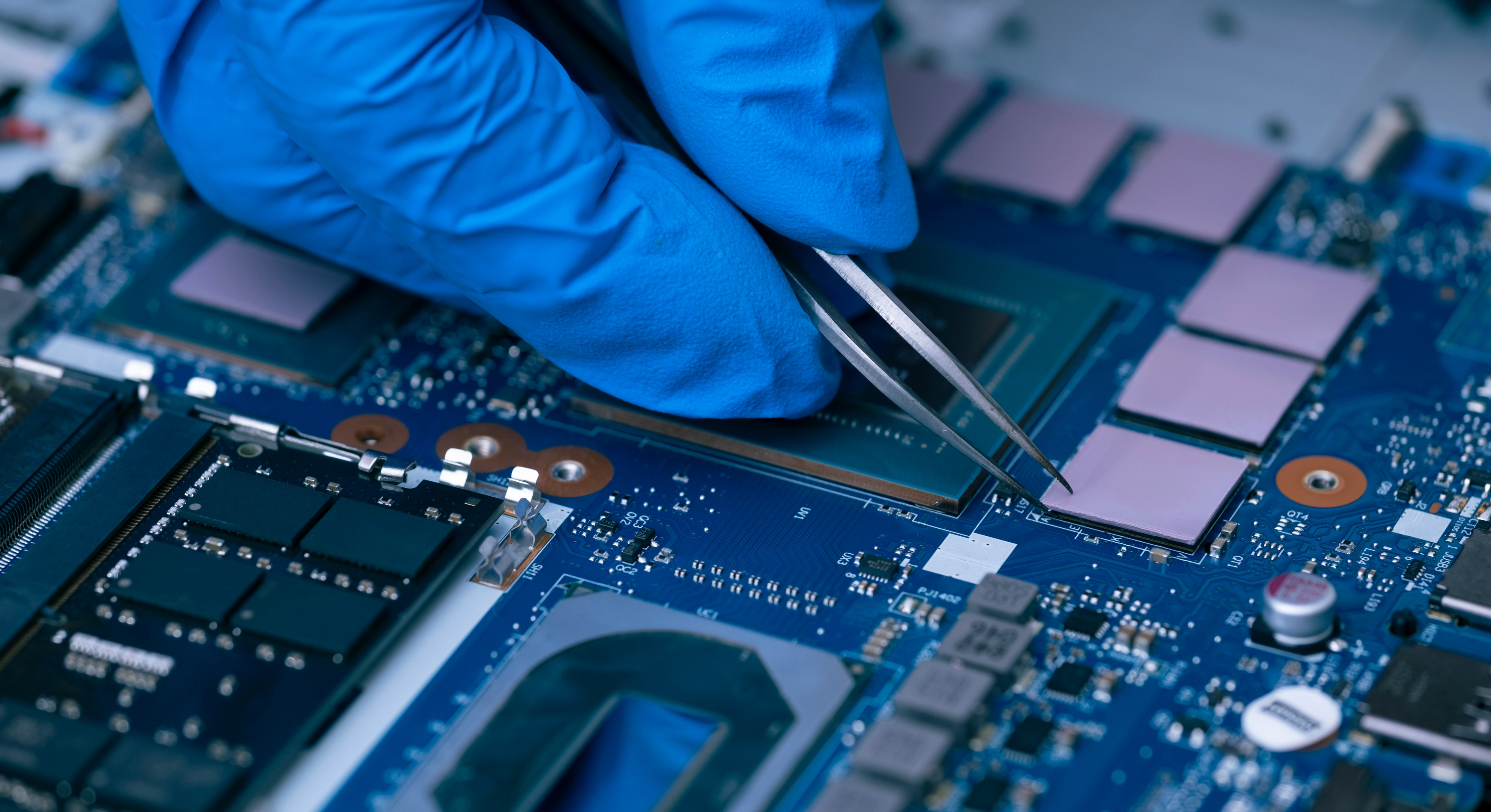 A Thermal Pad is a flexible, solid-form material — typically silicone or non-silicone based — that is sandwiched between a heat source and a heat sink. Because it maintains a fixed shape and thickness, assembly is straightforward and there is no risk of contamination or spillage during handling. Its ability to accommodate large or variable gaps between components makes it particularly well suited to high-volume production environments where process consistency is paramount. Many thermal pads also offer electrical insulation properties, making them an effective dual-purpose solution in applications where both insulation and heat dissipation are required.
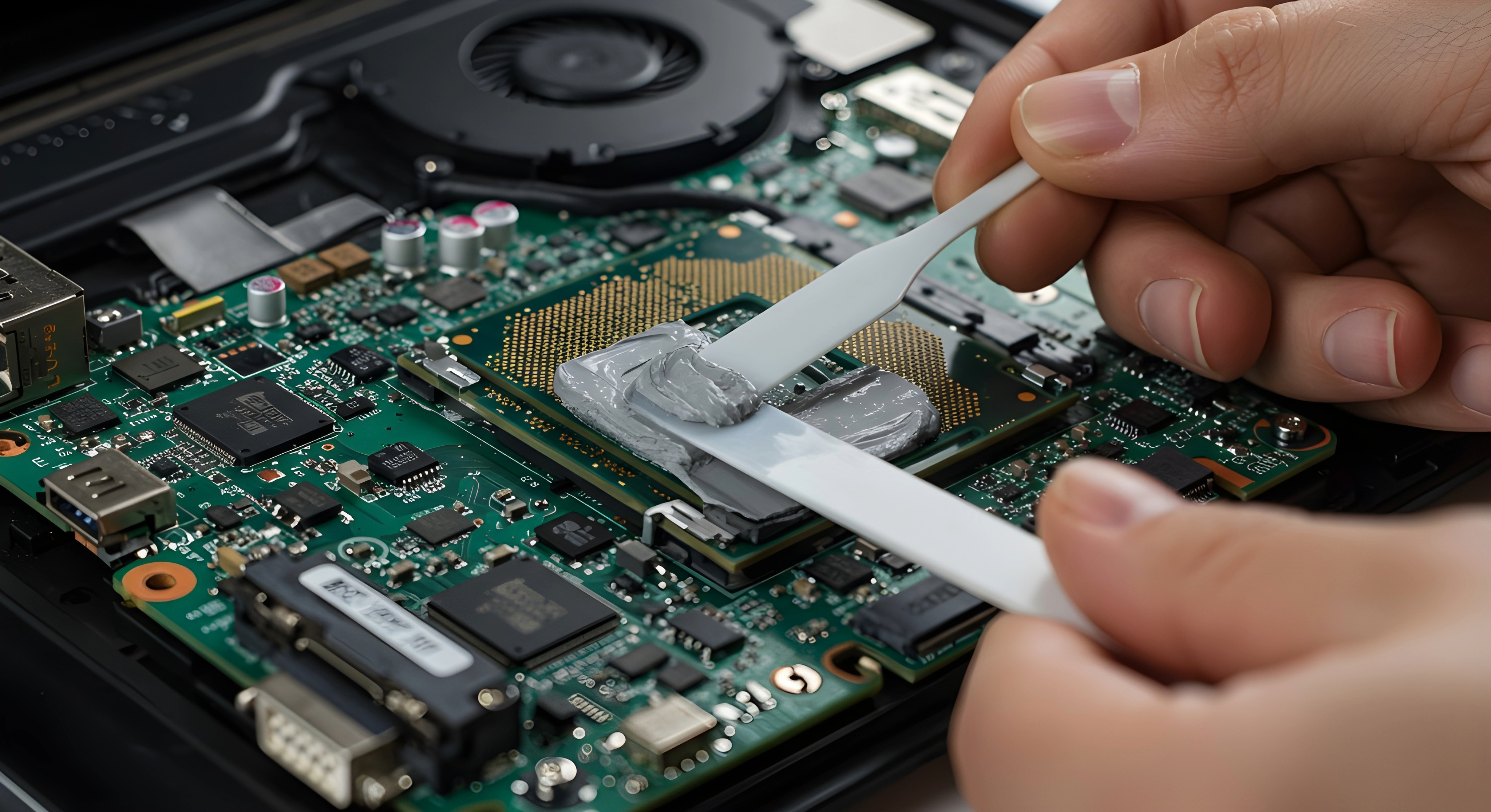 Thermal Grease, on the other hand, is a paste-form material in which thermally conductive fillers — such as metal oxides or carbon-based compounds — are dispersed in a silicone oil or similar base. When applied in a thin, uniform layer, it minimizes interface voids and delivers exceptionally low thermal resistance. However, performance can vary significantly depending on application thickness and consistency, which means process control by a skilled operator is essential. Over time, the grease may dry out, cure, or experience a 'pump-out' effect — where repeated thermal cycling gradually pushes the material out from the interface — potentially degrading thermal performance.
Which Material Has the Advantage — and When?
Thermal Grease, on the other hand, is a paste-form material in which thermally conductive fillers — such as metal oxides or carbon-based compounds — are dispersed in a silicone oil or similar base. When applied in a thin, uniform layer, it minimizes interface voids and delivers exceptionally low thermal resistance. However, performance can vary significantly depending on application thickness and consistency, which means process control by a skilled operator is essential. Over time, the grease may dry out, cure, or experience a 'pump-out' effect — where repeated thermal cycling gradually pushes the material out from the interface — potentially degrading thermal performance.
Which Material Has the Advantage — and When?
Thermal Pads excel in the following scenarios:
- In high-volume production where consistent quality must be maintained regardless of operator skill level.
- In products that undergo repeated assembly and disassembly — thermal grease requires full removal and reapplication each time, whereas a thermal pad can simply be replaced.
- In vibration-prone environments, where the solid form resists positional displacement and performance variation.
- When the gap between components is large or variable, a wide range of available thicknesses allows for flexible accommodation.
Thermal Grease is the better choice in the following cases:
- When interfacial contact is absolutely critical — such as high-performance CPU and GPU cooling — because its fluidity allows it to fill even microscopic surface irregularities, minimizing thermal resistance.
- When both mating surfaces are very flat and the gap is minimal, where a thin grease layer alone can deliver excellent thermal performance.
- When reassembly is infrequent and minimizing initial thermal resistance takes priority over long-term stability.
A Performance Comparison: The Thermal Resistance Perspective
Under comparable thickness conditions, thermal grease generally achieves lower thermal resistance than thermal pads, owing to its superior ability to eliminate interface voids. However, in real-world applications, numerous variables come into play — application uniformity, long-term degradation, and effective contact area — meaning that raw conductivity figures alone are an unreliable basis for performance judgment. In practice, a well-selected thermal pad often delivers more consistent and stable thermal performance than thermal grease applied unevenly or under poor process control.
How Should You Make the Right Choice?
The choice between thermal pads and thermal grease is not a question of which is superior — it is a matter of matching the material to the application and process conditions. If assembly ease and process stability are top priorities, a thermal pad is the right choice. If minimizing thermal resistance and maximizing interfacial contact are paramount, thermal grease is more appropriate. If you are unsure which material best fits your design, Taeyang 3C is ready to review your application environment — including gap dimensions, assembly method, heat dissipation requirements, and service cycle — and recommend the optimal material and specification.