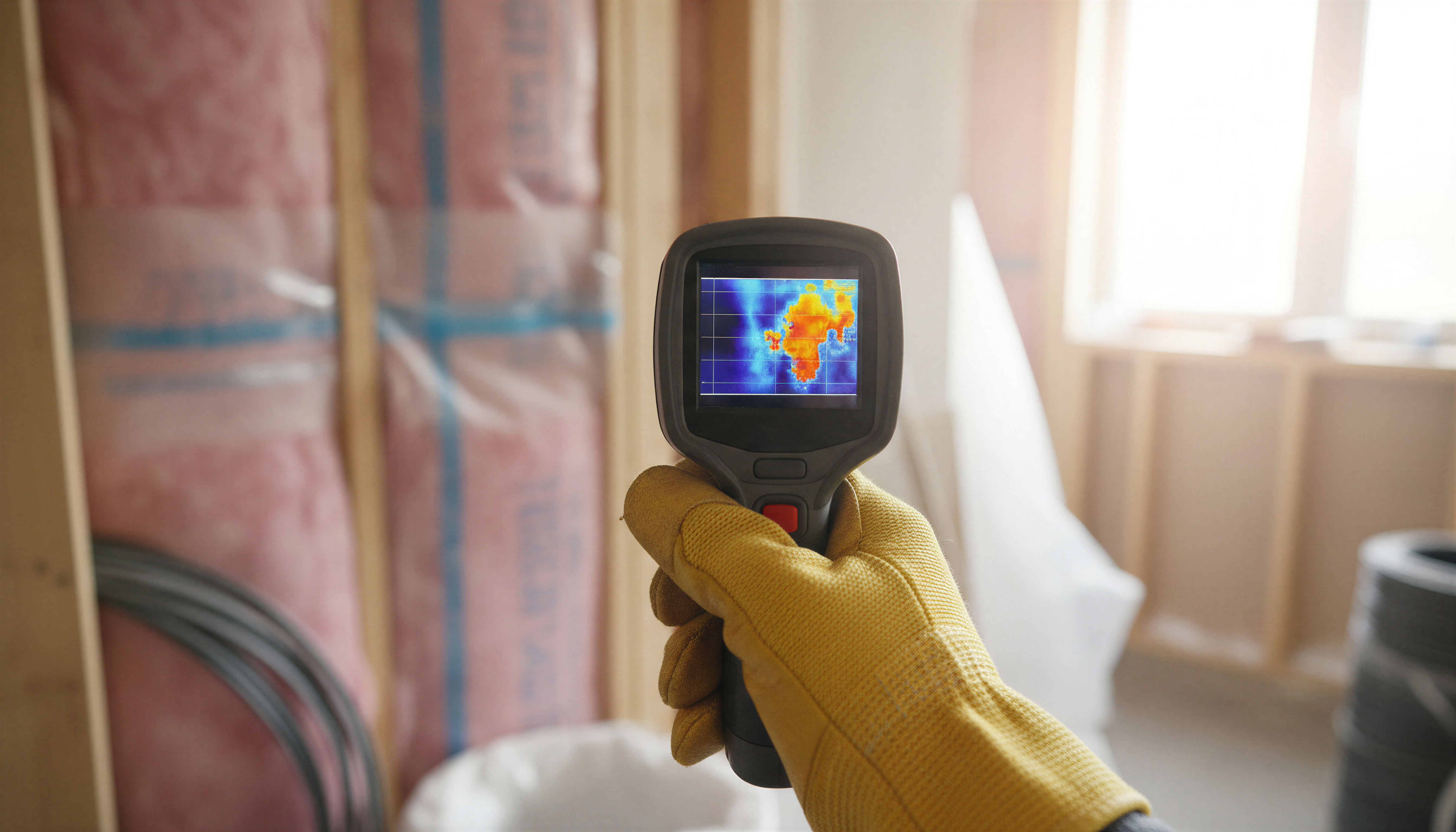
Thermal Conductivity (W/mK) is often the first spec that catches your eye when selecting a thermal material. A higher number suggests better heat transfer, but judging a product's actual thermal performance based on this single figure alone is highly risky. In many cases, a product touting a higher thermal conductivity than its competitors actually delivers lower real-world thermal performance. Taeyang3C explains how to correctly interpret a spec sheet and what numbers truly matter in the field.
How Is Thermal Conductivity Measured?
The thermal conductivity of a thermal material is typically measured using the Laser Flash Analysis (LFA) method or the Heat Flow Meter (HFM) method.
- Laser Flash Analysis first measures the material's thermal diffusivity, then calculates thermal conductivity using density and specific heat; it is generally suited to thin specimens.
- The Heat Flow Meter method establishes a temperature difference across both sides of a specimen and directly measures the resulting heat flow to derive thermal conductivity; it is relatively better suited to thicker materials.
What matters most is that measurement conditions — temperature, pressure, and specimen thickness — can cause the same material to show different values. This is especially true for flexible materials such as thermal pads, whose thermal conductivity characteristics can vary significantly depending on the compression pressure applied during measurement. It is essential to verify that the measurement conditions listed on a spec sheet match the actual use environment.
What Pitfalls Are Easy to Miss on a Spec Sheet? The thermal conductivity listed on a spec sheet is a pure, intrinsic performance value for the material itself, without accounting for the actual assembly environment. However, the key indicator that truly determines real-world thermal performance is not the material's thermal conductivity alone, but the Interface Thermal Resistance (ITR) between the heat source and the heat sink. Interface thermal resistance is determined not only by the material's thermal conductivity but also by factors such as thickness, surface roughness, contact pressure, and contact area. No matter how high a material's thermal conductivity is, if interface contact is imperfect, air gaps can form and overall thermal resistance can actually increase significantly.
In addition, some manufacturers present the maximum value achieved under optimal measurement conditions as their marketing spec. For example, a thermal conductivity value measured under high compression pressure may be listed, even though the actual assembly environment applies much lower pressure. Higher pressure fills voids and can lower thermal resistance, but in real-world use it is difficult to apply that much pressure to your precious chipsets. That is why it is essential to always check the measurement conditions — pressure, temperature, and thickness — alongside the thermal conductivity value.
How Do You Check Thermal Resistance?
Thermal resistance is calculated by dividing the temperature difference per unit area by heat flow, and is expressed in units of °C·cm²/W or K·in²/W. A lower thermal resistance means a smaller rise in interface temperature for the same amount of heat generated, making it a direct indicator of thermal performance. Especially when comparing materials of different thicknesses, thermal resistance is a more accurate benchmark than thermal conductivity. For example, a material with high thermal conductivity but greater thickness may actually have higher thermal resistance, while a material with lower thermal conductivity but sufficiently thin dimensions may have lower thermal resistance. Our products are available in a range of thicknesses to accommodate diverse assembly environments, and if you need precise thermal resistance data for specific thicknesses or pressure conditions, please feel free to contact us anytime.
What Verification Is Needed Before Actual Application?
After selecting a material, we recommend conducting a Sample Evaluation under conditions similar to the actual application environment. This includes thermal resistance measurement, long-term reliability testing (high-temperature storage, thermal shock, humidity exposure, etc.), and handling tests during the actual assembly process, to confirm that the spec sheet values are reproduced in real-world use. Taeyang3C supports sample evaluation and solution proposals tailored to your design environment.
How Do You Make the Optimal Choice? A high thermal conductivity value does not always mean a good product. Thickness, hardness, compressibility, interface characteristics, and long-term reliability must all be considered together, and whenever possible, it is important to check not only the spec sheet's thermal conductivity but also interface thermal resistance data under actual use conditions. Taeyang3C proposes the optimal material for your design requirements, backed by transparent data. If you need technical support for interpreting specs or evaluating and comparing materials, please feel free to contact us anytime.