[NOTE] Thickness and Compression in Thermal Materials
2026.09.30 13:43:1
When selecting a thermal material, many engineers put the most weight on thermal conductivity. Conductivity is certainly an important metric, but there are other key variables that decide real-world heat dissipation performance: thickness and compression rate. If these two variables aren't reviewed thoroughly at the design stage, they can lead to assembly defects, component damage and reduced thermal performance. Below, 3C TaeYang walks through the points you should check during design.
Why does thickness affect thermal performance?
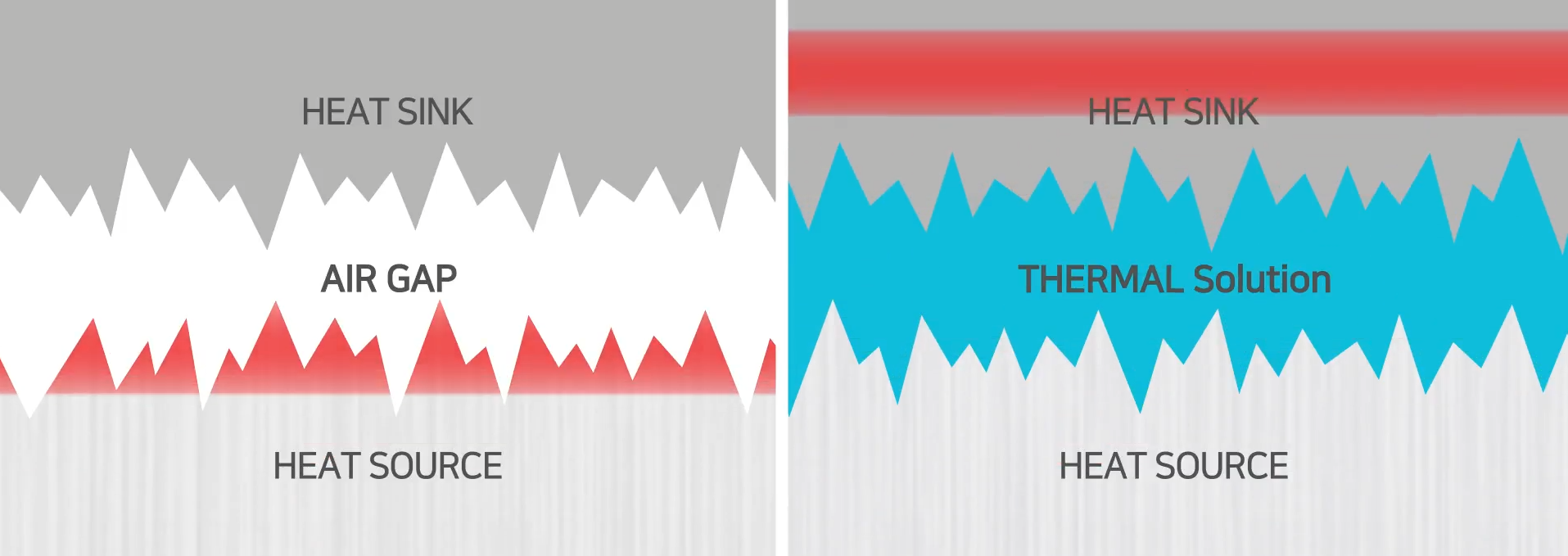
The basic job of a thermal pad is to eliminate the air gap between the heat source and the heat sink. Air has a thermal conductivity of only about 0.026 W/mK, so even a tiny air layer can significantly increase thermal resistance. That's why a thermal pad should be slightly thicker than the actual gap between components, so it reliably fills the space. On the other hand, if the pad is too thick, the material itself becomes additional resistance in the thermal path. At the same thermal conductivity, a thicker pad means higher thermal resistance.
In mass production, the actual gap between components can also differ from the ideal design value. Pad thickness should account for the parts' dimensional tolerance and assembly tolerance. The goal is a thickness range that still compresses enough at the minimum gap and still keeps full contact at the maximum gap.
How are compression rate and compressive load related? A thermal pad is compressed by assembly pressure, and the resulting compressive load is transferred directly to the components. If that load is too high, it can physically damage sensitive parts such as PCBs and semiconductor chips. So it's important to check the material's hardness and its compressive stress-strain curve to confirm the design stays within the allowable compression range.
Soft materials with a high compression rate deform easily even under low pressure and deliver excellent interface contact, but their recovery can decrease over long-term use. In vibration environments in particular, the material goes through repeated compression and release, which can build up permanent deformation, so long-term reliability data should always be checked. Harder materials with a low compression rate are more durable, but on parts with rough surfaces or in large-gap applications, contact can suffer and air pockets may remain.
How are liquid gap fillers different from thermal pads?
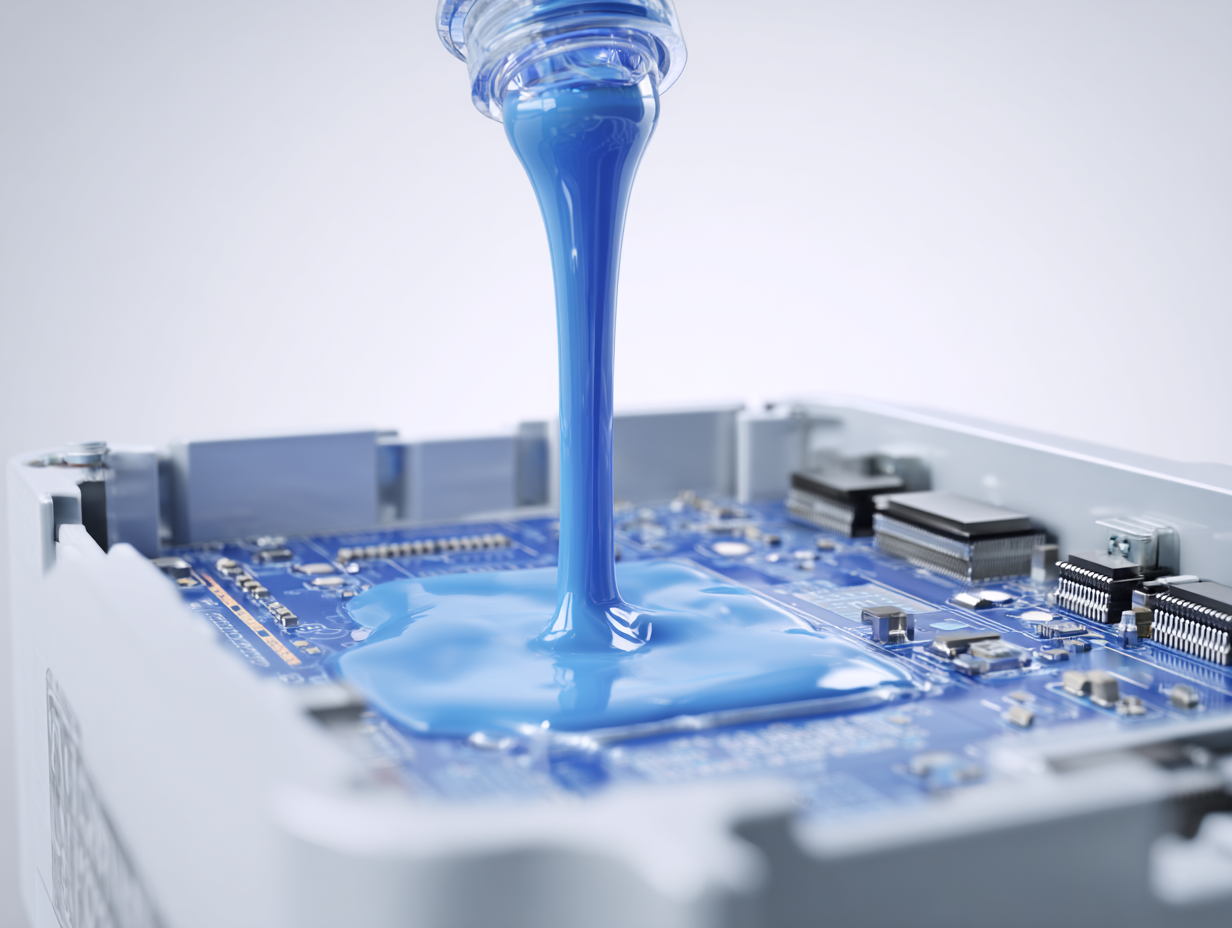
Where gaps are very large (3mm or more) or components have complex shapes, a liquid gap filler can be a better fit than a solid thermal pad. Because it flows before curing, a liquid gap filler can completely fill even complex spaces. Once cured, however, the material is fixed in place, which makes disassembly and rework difficult, and thickness control during dispensing is critical. 3C TaeYang supplies both solid thermal pads and liquid gap fillers (thermal gels & thermal potting compounds), and recommends the best form for each customer's assembly structure.
How do you make the right choice? Thickness and compression rate often involve a trade-off. Based on your design drawings and component specifications, 3C TaeYang will recommend the optimal thickness and hardness, and custom thicknesses are available when needed. Bringing a materials partner into the review from the early design stage makes for a more complete thermal design.
For technical consultation on thickness and compression characteristics, please feel free to contact us anytime.